ShareThis

Friday, October 18, 2013

Introducing Greenstream, the World’s First LNG-Powered Barge

Introducing Greenstream, the World’s First LNG-Powered Barge - gCaptain

Posted - By Rob Almeida - gCaptain

Since March of 2013, the Greenstream, the world’s first 100% LNG powered barge has been delivering liquid fuels along the Rhine river in The Netherlands.

This innovative vessel was designed and built at Peters Shipyards and is the first of two LNG-powered barges to be chartered by Royal Dutch Shell. Powering the vessel are four small Scania-Sandfirden spark-ignited natural gas engines with LNG fuel tanks provided by Cryonorm Projects and fuel systems via Cryovat-Rootselaar.

In a statement on Shell’s website, they note that the four engines provide a great deal of flexibility when it comes to power needs, along with greatly reduced emissions as compared to conventional fuels. With the four engines, “power can be varied as less is required to travel downstream than upstream with potential for fuel savings. These engines will operate at lower frequency than traditional barges, reducing vibration and noise levels which could be advantageous when traveling through populated areas on the Rhine.”

This new LNG-powered barge, along with her sister vessel, the LNG Greenrhine pictured below, will operate in The Netherlands, Belgium, Germany and Switzerland and carry enough LNG to sail for up to seven days – from Rotterdam to Basel and back without refueling.
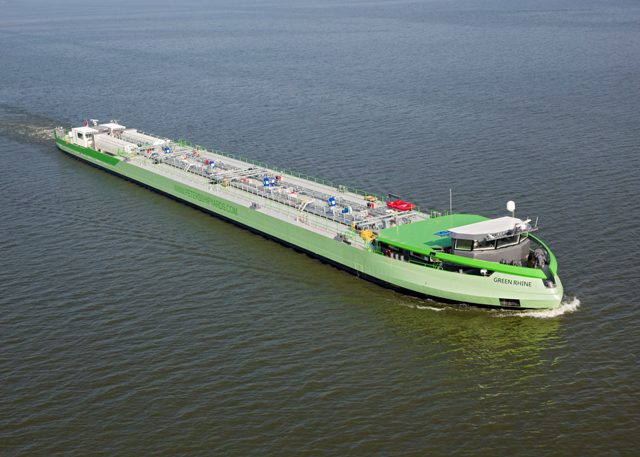
lng greenrhine
LNG GREENRHINE, image: Peters Shipyard

Post to be found at:
www.blogger.com/blogger.g?blogID=8359244270602229612#editor/target=post;postID=7356017981525825132
TopOfBlogs

Thursday, October 17, 2013

Color Line Orders Wärtsilä Emissions Scrubbers - gCaptain

Posted - By Rob Almeida On

The Baltic region is a hot-bed of environmentally-aware shipowners at the moment as current and anticipated environmental legislation will require ships operating within the Baltic Emissions Control Areas (ECAs) to have drastically reduced emissions.  These requirements have prompted power systems manufacturers like Wärtsilä to come up with options such as LNG-powered engines and emissions scrubbers to meet these new requirements.
color line superspeed
Wärtsilä announced today that they have been contracted by Color Line, Norway’s largest cruise and ferry operator, to retrofit its Open Loop Scrubber systems on three of their vessels including the company’s SuperSpeed I, Color Magic and Color Fantasy ships.
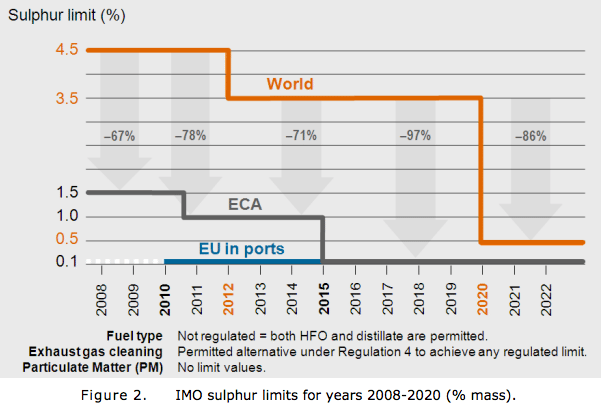
imo sulfur limits graph
via Wartsila
Wärtsilä notes that they have already supplied 36 ships with emissions scrubbing systems which are capable of reducing sulphur oxide emissions to an undetectable level while burning either high (3.4 %) or low sulphur (1.5 %) heavy fuel oil.
The contract announced today was signed in September 2013 and it follows a similar order placed in June 2013 to retrofit Color Line’s SuperSpeed II ferry.
“Color Line sees environmental issues as a priority and the use of Wärtsilä exhaust gas cleaning systems on another three of our vessels is a significant step towards our goals in this respect. The marine sector is obligated to operate in a more sustainable manner and we applaud Wärtsilä for its leadership in environmental performance enhancing technologies,” says Mr Jan Helge Pile, SVP Marine & Technical, Color Line Marine A/S.
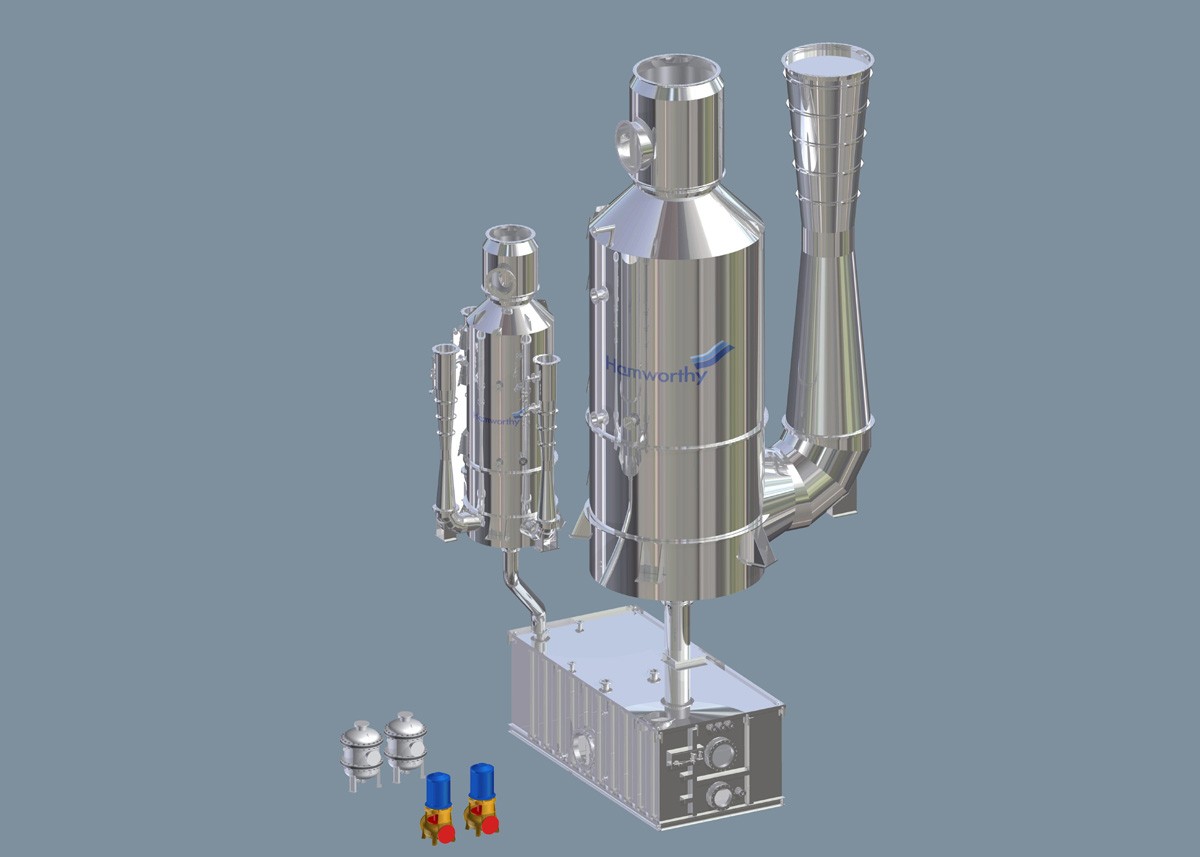
Wärtsilä Open Loop Scrubber
“Wärtsilä continues to demonstrate its leadership in the delivery of innovative technologies that enable ship owners and operators to meet the dual challenges of environmental compliance and rising operating costs. Our exhaust cleaning systems are one of the increasingly important elements of this strategy, offering an efficient and cost-effective alternative to low- sulphur fuel,” says Mr Sigurd Jenssen, Director, Exhaust Gas Cleaning, Environmental Solutions, Wärtsilä Ship Power.

How the Wärtsilä Open Loop Scrubber System Works…
The system operates in an open loop using seawater to remove SOx from the exhaust. Exhaust gas enters the system and is sprayed with seawater in three different stages. The sulphur oxides in the exhaust react with the water to form sulphuric acid. Chemicals are not required since the natural alkalinity of seawater neutralizes the acid.
Wash water from the system is treated and monitored at the inlet and outlet to ensure that it conforms to all applicable discharge criteria. It can then be discharged into the sea with no risk of harm to the environment.


TopOfBlogs

Wednesday, October 16, 2013

Euronav Believes Eco-Ship Newbuildings are a Waste of Mone - gCaptain

Posted - October15, 2013 - By Rob Almeida - gCaptain
Post to be found at:

Euronav, the Belgium-based owner of large crude carriers believes that so-called “eco-ships” do not exist in the large tanker sector and that building them does nothing more than exasperate the current issue of oversupply that plagues the large tanker sector.  After experiencing a net loss of over $27 million in the 3rd quarter, Euronav is clearly approaching the task of cutting costs as a means of pure survival.

In their 3rd quarter earnings statement released today, Euronav notes that “most ‘eco gains’ can be replicated through retrofitting fuel saving devices which can be done to existing ships at a fraction of the cost of a newbuilding.”

Specifically, Euronav notes that “a ship with an electric heavy fuel heater can switch off its boiler when slow steaming or drifting and this can save 5-6 tonnes per day (US$3,000 to US$3,600) which is as much as the savings claimed for new ships (so-called Eco) over old ships in reduced sailing consumption. Yet, this retrofit costs no more than $30,000 and can be installed by the ship’s crew, a payback period of less than 10 days waiting time.” Euronav acknowledges the fact that “sailing is the most significant activity for fuel consumption” and that “no measure will deliver a uniform improvement in all trades,” however.

When it comes to saving fuel while underway, analysis by Euronav has shown that operating the vessel efficiently “has been demonstrated to have a value on a continuous basis of up to 10% between good operators and average operators.” The best operators, they note, ensure the vessel trim is optimized during loading, the engineering plant is run in accordance with the design speed of the vessel, and the ship is navigated in such a way as to take advantage of advantageous current and weather whenever possible.

Many new shipyards are touting “optimized hull form design” with their new vessels, but Euronav points out that due to the high block coefficients inherent to large crude tankers, there is no way to significantly optimize the hull form without diminishing the freight carrying capacity, and thus earnings. Optimized propeller and rudder designs, as well as the use of a Mewis Duct, are obvious areas of improvement however, particularly considering slow steaming is widely being used.

Coatings are also a critically important factor as well.  Euronav notes that fuel savings of up to 10 percent have been seen by freshly painted ships as compared to older ships.  There are many different paint technologies available on the market these days, and the issue for owners is to decide whether or not the return on investment exists by drydocking a ship early to clean the hull and apply new paint.

Read: Propeller Technology to Make Your Ship More Efficient
TopOfBlogs

Tuesday, October 15, 2013

Oil Tanker Explodes in Chinese Shipyard, At Least 7 Dead [Video] - Maritime Executive

Posted - October 14, 2013 - Maritime Executive


An oil tanker explosion killed at least seven people in China's eastern coastal city of Ningbo in Zhejiang Province on Saturday, state media reported. One person was seriously injured in the explosion.

The tanker caught fire and exploded at around 8:40 AM local time as it was undergoing repairs. The fire was finally extinguished at 11 a.m. CCTV broadcasted footage of local firefighters spraying the burning ship with water as large plumes of smoke rose into the sky.

Oil began to leak soon after the tanker caught fire. The amount of oil which had leaked into the Yongjiang River was unknown. The river is an important source of water for Ningbo city.

Video and Post to be  found at:

http://www.maritime-executive.com/article/Oil-Tanker-Explodes-in-Chinese-Shipyard-At-Least-7-Dead-Video-2013-10-14/
TopOfBlogs

Environmentally Acceptable Lubricants: New Technology to Protect the Ocean - gCaptain

Posted - October 14, 2013 - By gCaptain Staff

The shipping industry is well on its way to becoming greener. However, being aware of global environmental regulations, let alone knowing how to be compliant, can be challenging for even the most seasoned ship owner.
Earlier this year, US Environmental Protection Agency (EPA), issued the 2013 Vessel General Permit (VGP), and part of it regulates the use of lubricants onboard vessels traveling through US waters. With this step, the EPA has been the first to introduce legislation on marine lubricants.
The VGP requirements, which come into force on 19 December 2013, indicate that all vessels over 79 feet entering within three miles of the US coast must use an environmentally acceptable lubricant (EAL) in all oil-to-sea interfaces, unless it is technically unfeasible.
According to the EPA, one liter of mineral lubricant pollutes 1,000,000 liters of seawater and with more than 100,000 vessels in the global fleet; even minimal oil leakages can lead to critical environmental challenges. The environmental impact of these leakages are not going unnoticed and it’s a leap forward to see that legislation to control this is now being introduced. The International Maritime Organization’s Maritime Safety Committee for ships has also issued similar guidelines for ships wanting to travel through polar waters.
While frequent, low-volume operational discharges may not cause the concern or problems associated with major oil spills, Environmental Research Consulting estimates that the total annual cost for lubricating oil lost or discharged in the world’s 4,708 ports during vessel operation is around US$322 million. Therefore, this is a problem not only for the environment but also for operators that are trying to pull through an unstable economy and run cost-efficient operations.
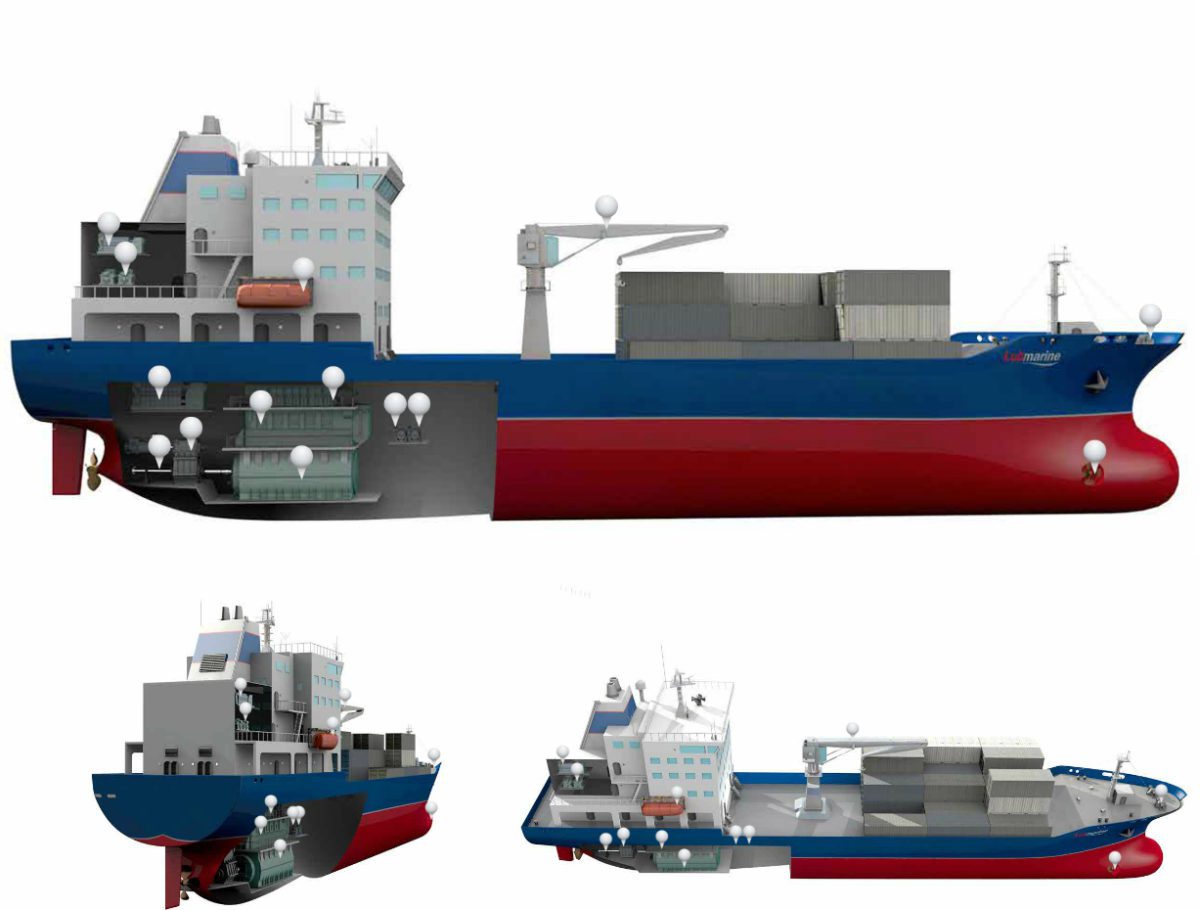
Marine lubricants provider TOTAL Lubmarine recently launched an online virtual vessel, a user-friendly, and visual way to gain an appreciation for the different parts of a vessel that will require these environmentally-friendly lubricants. The animated graphic also makes it easy to match each part with a corresponding lubricant.
vgp total lubmarine
click for larger
Several main areas of a vessel, such as propeller shafts and stern tubes, regularly suffer from leakages that can remain undetected for long periods of time.  TOTAL Lubmarine notes that their EALs are largely ester-based, making them more durable and less toxic than mineral lubricants, as well as being biodegradable, non-toxic and non-bioaccumulative.
For example, TOTAL claims their Bioneptan, a biodegradable stern tube lubricant manufactured with synthetic ester base oils, enables almost four fifths of the oil to return to its original carbon and water state within 28 days.
As shipping continues to evolve into a more sustainable industry, lubricant providers must take greater responsibility to ensure that shipowners and operators are aware of the steps needed to comply with legislation. It is crucial that they continue to work closely with both original equipment manufacturers and customers to develop solutions that help minimize financial loss, enhance performance and do their part to make the industry greener.

Post to be found at:
http://gcaptain.com/environmentally-acceptable-lubricants/?utm_source=feedburner&utm_medium=feed&utm_campaign=Feed%3A+Gcaptain+%28gCaptain.com%29  
TopOfBlogs

Ocean And Climate: The New Theory - Eurasia Review

Posted - October 15, 2013 - By Eurasia Review

Assessing the effect of climate change on upwelling ecosystems is essential to be able to predict the future of marine resources. The zones concerned by this upwelling of cold deep water, which is very rich in nutrients, provide up to 20 % of global production of fish.
Since the 1990s, the theory adopted by the majority of the scientific community affirmed that these phenomena were intensifying. The rising temperatures of the air masses above the continents were expected to quicken the trade winds, which would in turn increase the upwellings, thereby cooling the surface water. But this theory has been contradicted by the recent work of researchers from the IRD and its partners.
In their new study, led off the coast of North and West Africa, the scientists reviewed the wind measurements taken over the past 40 years and the data of the meteorological models along the Spanish and West African coastline, and discovered that they do not show an acceleration of the wind on a regional scale that would be likely to significantly cool the coastal waters.
In fact, quite the opposite is true, since the satellite images and in situ measurements of the surface water temperature show a distinct upward trend in the temperature for the entire zone, at a rate of 1°C per century. These new findings contradict the hypothesis that the upwelling of the Canary Current is intensifying.
Until now, the study of this ecosystem focused primarily on paleoclimatic reconstructions based on samples of marine sediments. According to the geochemical analysis of these samples, planktonic organisms have evolved in an increasingly cold environment over the last few decades. This led scientists to conclude that the temperature of the surface water was dropping. But in view of the new findings, the oceanographers have put forward another explanation: the thermal signal deduced from the paleoclimatic data is due to a progressive migration of plankton towards the depths because, on the contrary, the surface water is getting warmer!
The reaction of the coastal ecosystems to climate change remains complex, because it depends greatly on local specificities – other upwelling systems, such as that of the California Current, clearly show a trend of intensification and cooling of the water in recent decades.
At the level of the ecosystem itself, the effects of the warming of the surface waters can be antagonistic: it can for example encourage the growth of fish larvae, but also increase the temperature gradient between the surface water and the deeper water and thereby modify the food chain, etc. Researchers will now have to address all these questions.

Post to be found at:
http://www.eurasiareview.com/15102013-ocean-climate-new-theory/?utm_source=feedburner&utm_medium=email&utm_campaign=Feed%3A+eurasiareview%2FVsnE+%28Eurasia+Review%29
TopOfBlogs

Monday, October 14, 2013

Emissions- unilateral monitoring on the horizon - Tanker Operator

Posted - October 11, 2013 -  Tanker Operator

The European Union (EU) is still proposing to push forward its initiative to monitor C02 emissions from shipping.

According to an EU paper released back in June, shipping remains the only transport mode not included in the EU’s GHG emissions reduction commitment and currently accounts for 4% of the European total.
Globally, the maritime transport sector accounts for 3% of emissions, but this is expected to rise to 5% by 2050, despite the introduction of mandatory and operational efficiency measures, such as the lower ECA permissible sulphur content levels from January, 2015.
Long term, the EU aims to reduce vessel C02 emissions by up to 75%. In other words, switching over to the use of low sulphur fuels within the European ECAs may not be enough to satisfy EU bureaucrats, who appear to be looking at a tougher policy, Gibson Research said in its weekly report.
The EU wants a global approach taken to reduce shipping emissions and proposes that from 2018, large ships using EU ports should report their verified emissions.
In the past, the EU has acted independently from the IMO when it felt that international legislation has been too slow in coming.
So who will be affected? The proposal is for EU regulation on monitoring, reporting and verification (MRV) of C02 emissions from all ships larger than 5,000 gt on voyages into, out of and between EU ports.
This will be required per-voyage, as well as yearly monitoring of EU emissions. Companies will also have to provide an emissions report for their previous year’s activity. The MRV will be in addition to the adoption of the technical efficiency measures introduced by the IMO in 2011, which were designed to deliver significant emission reductions.
The US authorities also appear to be taking an increasingly stricter position with respect to their own emissions control area, Gibson warned.
Recent orders placed at the NASSCO shipyard for Jones Act tonnage has included two containerships and four MRs (with four options), which will be dual fuelled (oil & LNG).
With the first delivery of these just two years away, the owners appear confident that access to LNG fuel will not be a problem in the US, even more so with the forecast growth of domestic gas production.
The debate on alternative fuels is heating up. As these environmental deadlines approach, owners have some tough decisions to make in increasingly harsh shipping markets. The only certainty is that the emission legislation will become increasingly tougher and even more costly to implement, Gibson concluded.

Post to be  found at:
http://www.tankeroperator.com/news/emissions--unilateral-monitoring-on-the-horizon/4785.aspx
TopOfBlogs